
Gyeongju: The Guide to Ancient Korean History
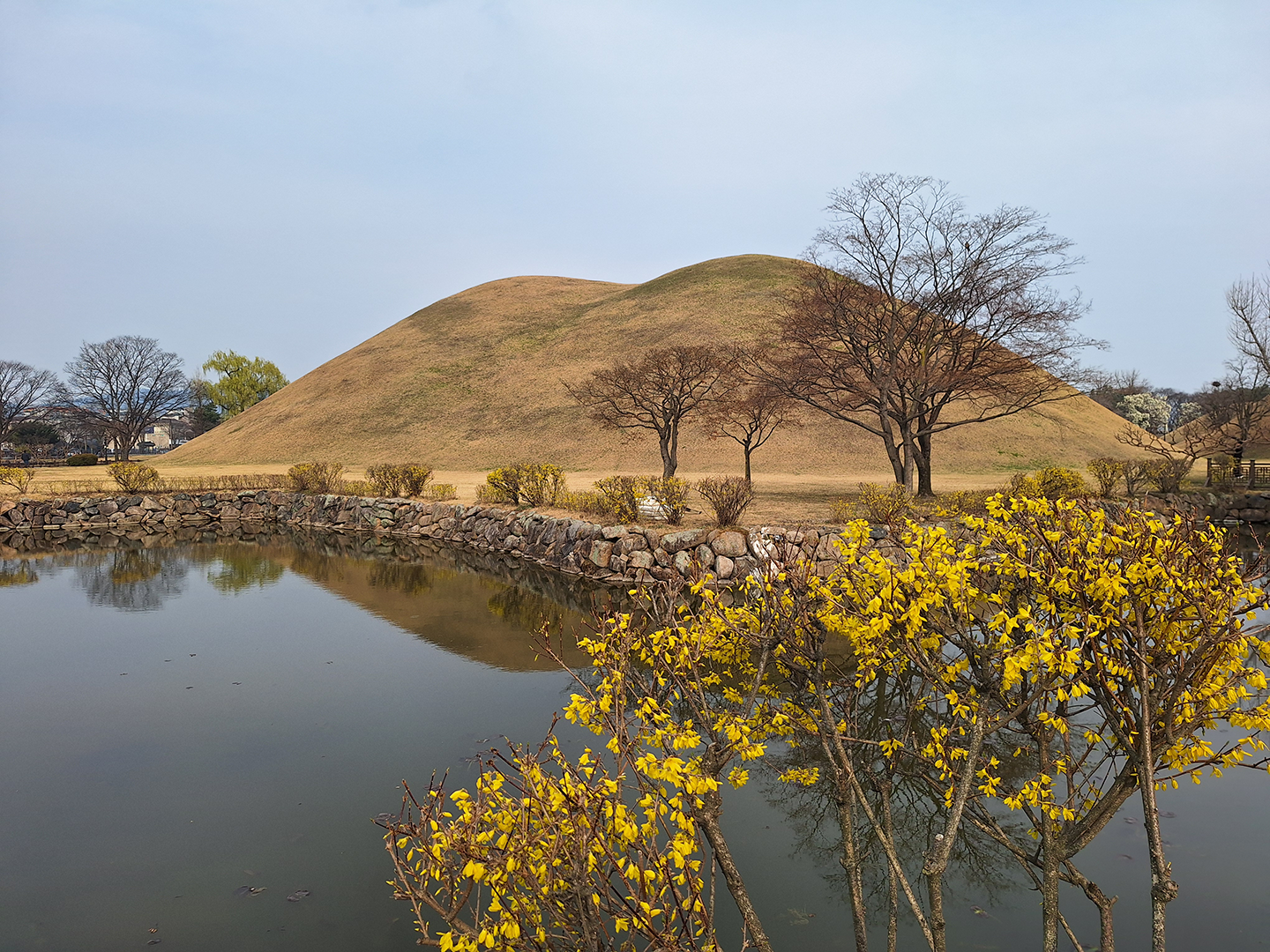
Well, well, well. It has been quite a while, hasn’t it? Between life changes and general business, we haven’t been able to write any articles recently. But I’m back! And I plan to write articles more consistently now. And the first topic back will be about Gyeongju.
Gyeongju is a place I have always heard about and wanted to visit. And I finally got the opportunity about 2 months ago! My grandma and cousin were visiting Korea and we decided to include it on our travel itinerary.
Background
Gyeongju is located about 2 ½ hours southeast of Seoul by train. It is close to the Eastern coast of Korea, albeit inland about 30 minutes. And it is only about 30 minutes north of Busan, Korea’s second largest city.
Gyeongju is known primarily for being a great place to experience and learn about ancient Korean history. It was once the capital of the ancient Korean civilization known as Silla, which existed for nearly years ending in 935 CE. Because of this, there are countless historical sites to visit, to the point that the city is often referred to as “the museum without walls”.
So if you are interested in Korean history or even just history in general, I would highly recommend spending a few days in Gyeongju.
Central Gyeongju
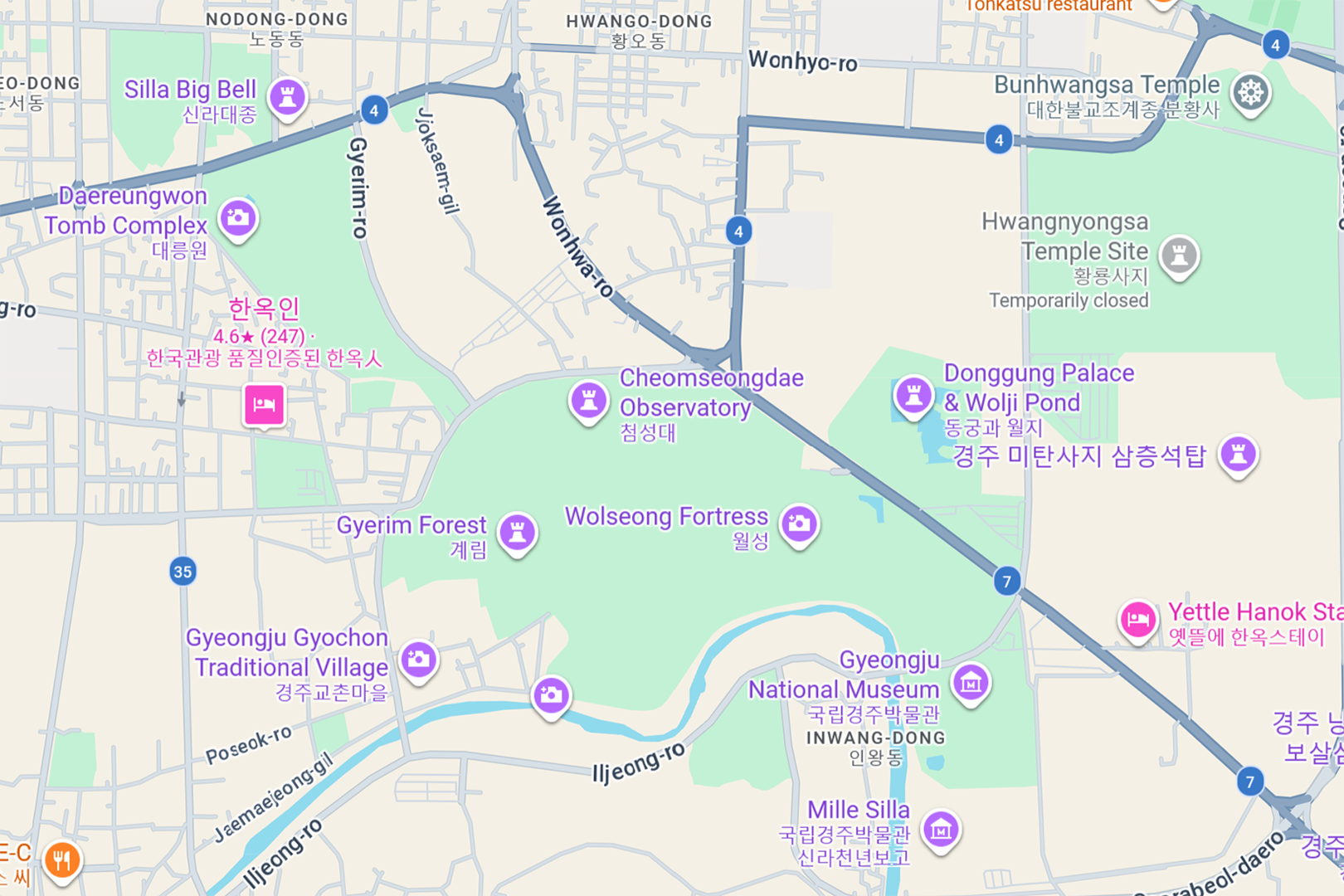
Locations of interest are marked in purple. As you can see, everything is quite close together in central Gyeongju.
The first set of locations I am going to mention are all located in central Gyeongju. They are in close proximity to each other and can be visited on the same day. They are all generally in walking distance of each other, though be prepared to walk quite a bit!
All of these are theoretically possible to do in one day, though I would personally recommend allocating two days to really take your time and truly enjoy the sites. It is quite a beautiful and peaceful city, so it would be a shame if you missed that aspect while rushing around trying to see everything.
I am going to break this section up even more between places that I think you should visit during the day vs. the evening/night. Many of these are variable and can be visited at either time of the day, so don’t feel like this is how you have to do it, but this is what I would recommend!
Day Activities
Gyeongju National Museum
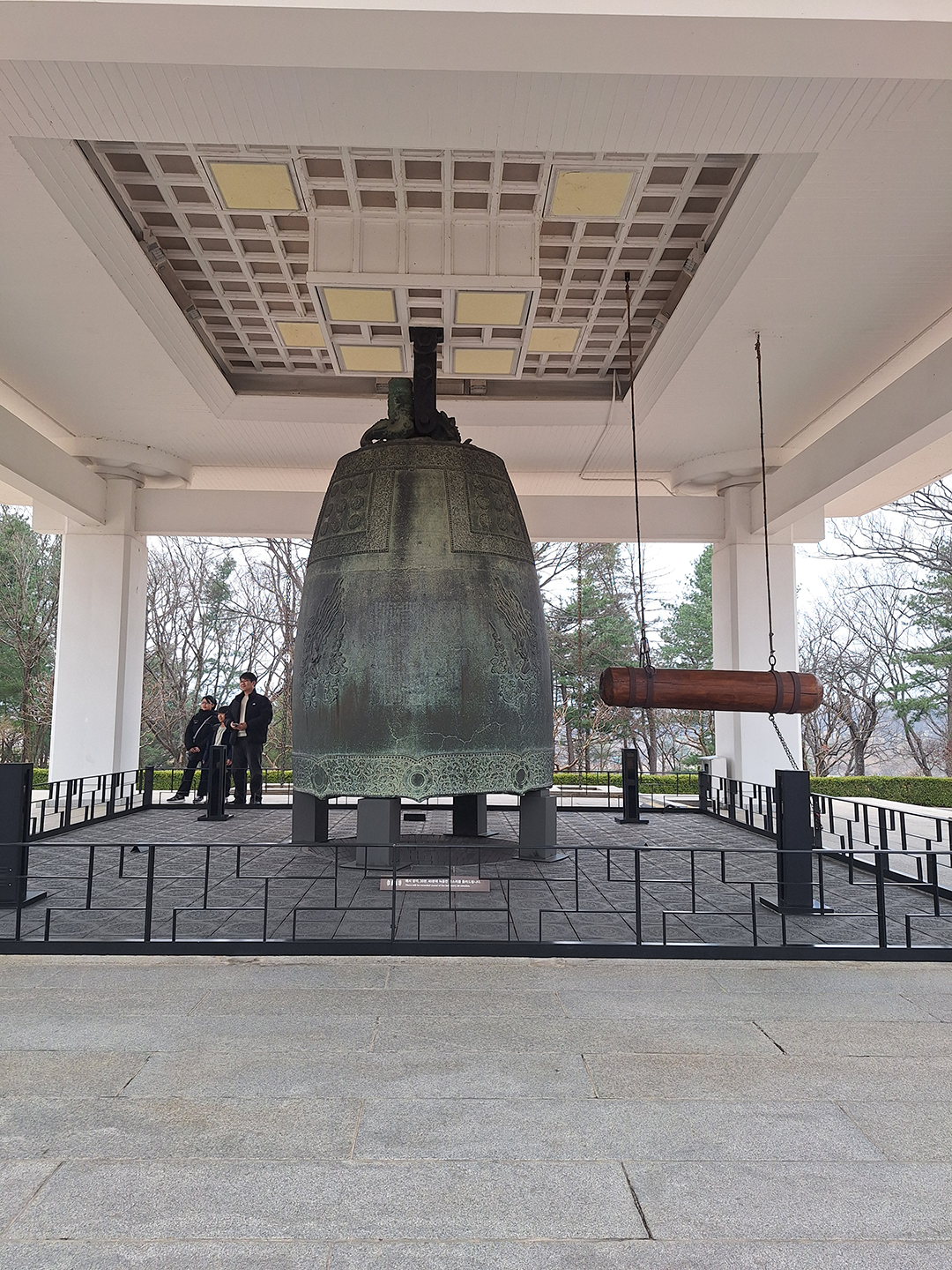
I don't personally like to take pictures inside museums, so enjoy this picture of the Divine Bell of King Seongdeok on the grounds of the museum!
Now, I know I made a big deal about the sights in Gyeongju generally being outside, but we are going to start with one that is mostly indoors.
The Gyeongju National Museum is a wonderful museum. Due to Gyeongju formerly being the capital of Silla, there are countless artifacts displayed at this museum. There are so many, in fact, that most of the artifacts can’t even be displayed! They are even still conducting excavations and finding new artifacts constantly in Gyeongju, which you can easily notice while walking around the city.
There are multiple exhibitions, but the main three that I would recommend going to are the Silla History Exhibition Hall, the Silla Art Exhibition Hall, and the Outdoor Exhibition. They are all located in close proximity to each other with the Outdoor Exhibition being located at the entrance to the complex.
I would take special care to see the Divine Bell of King Seongdeok, a massive exquisitely decorated bell finished in 771. This massive bell is designated as the 29th National Treasure of Korea.
The other outdoor exhibition I would take note of is the Three-Story Pagoda, a relic from the Unified Silla period. It was originally located at the former site of the Goseonsa Temple and moved here for display and protection from damages.
I especially like this one, because not only is it quite interesting on its own to look at, where it is located provides a beautiful backdrop of the lush mountains behind it. You can take some nice pictures of it at various times of the year, giving it a different feeling every time.
The last thing I would like to mention is the buildings themselves. One of the things that I love that Korea does is try to make interesting or historical looking architecture for their tourist sites. All the buildings in this museum complex share aspects traditional Korean architecture making them almost seem like traditional sites themselves, even if they were built in more modern times.
It’s just so much more interesting and fun to look at and travel to than drab large, modern buildings housing ancient relics and artifacts.
Wolseong Fortress
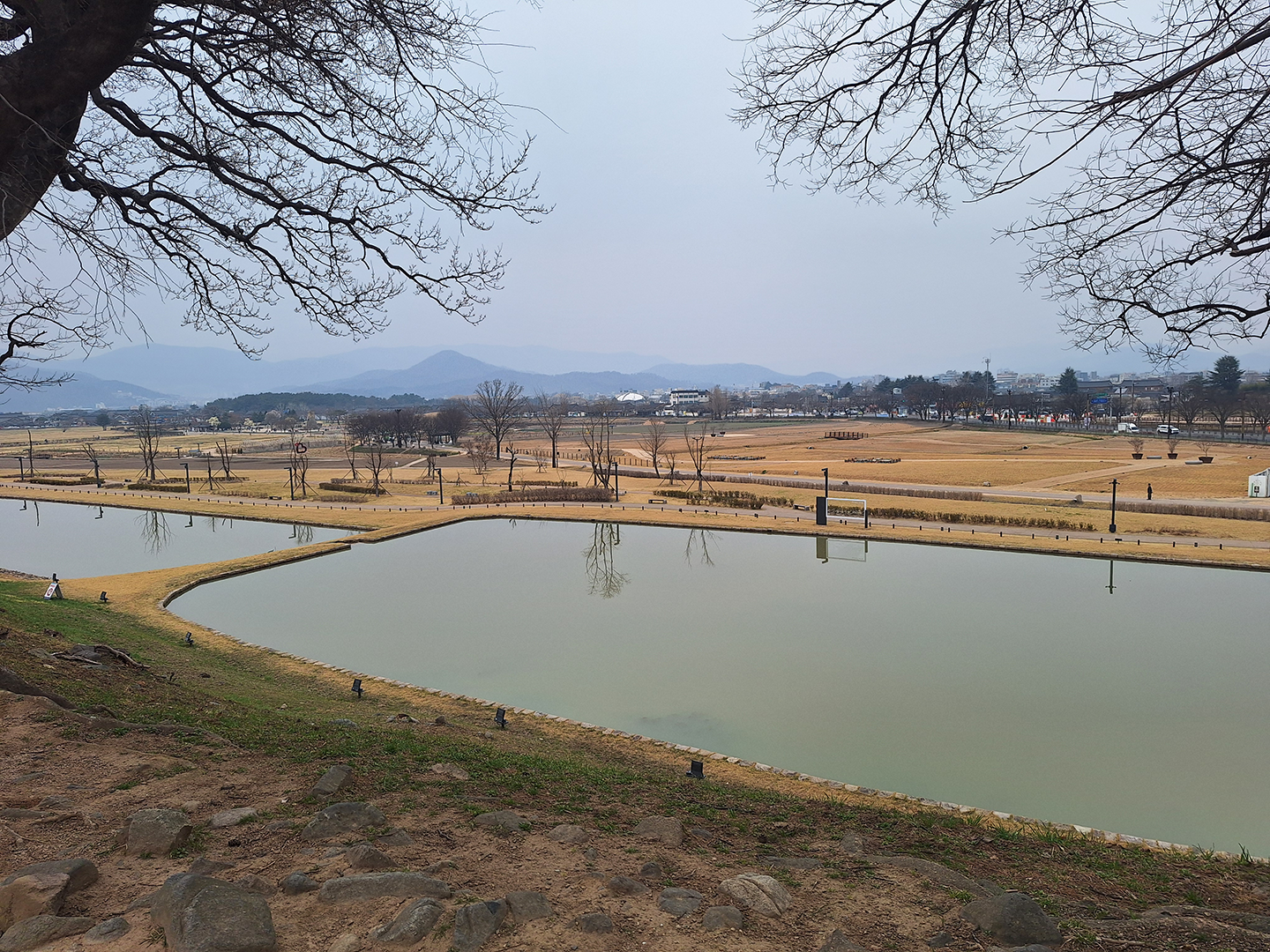
Right next door to the Gyeongju National Museum is Wolseong Fortress. Wolseong Fortress is the ruins of a former royal palace. It is named Wolseong, meaning Crescent Moon, because the shape of the palace walls resembles the shape of a crescent.
It is here where you can truly see why Gyeongju is nicknamed the “museum without walls”. While walking around, you can see active excavation sites that are being dug through right in front of you! Nowadays, this area is just a large park. With so many paths and trees and plants, it is very peaceful to spend your time walking through. While we were there, I even saw some cool birds I had never seen before.
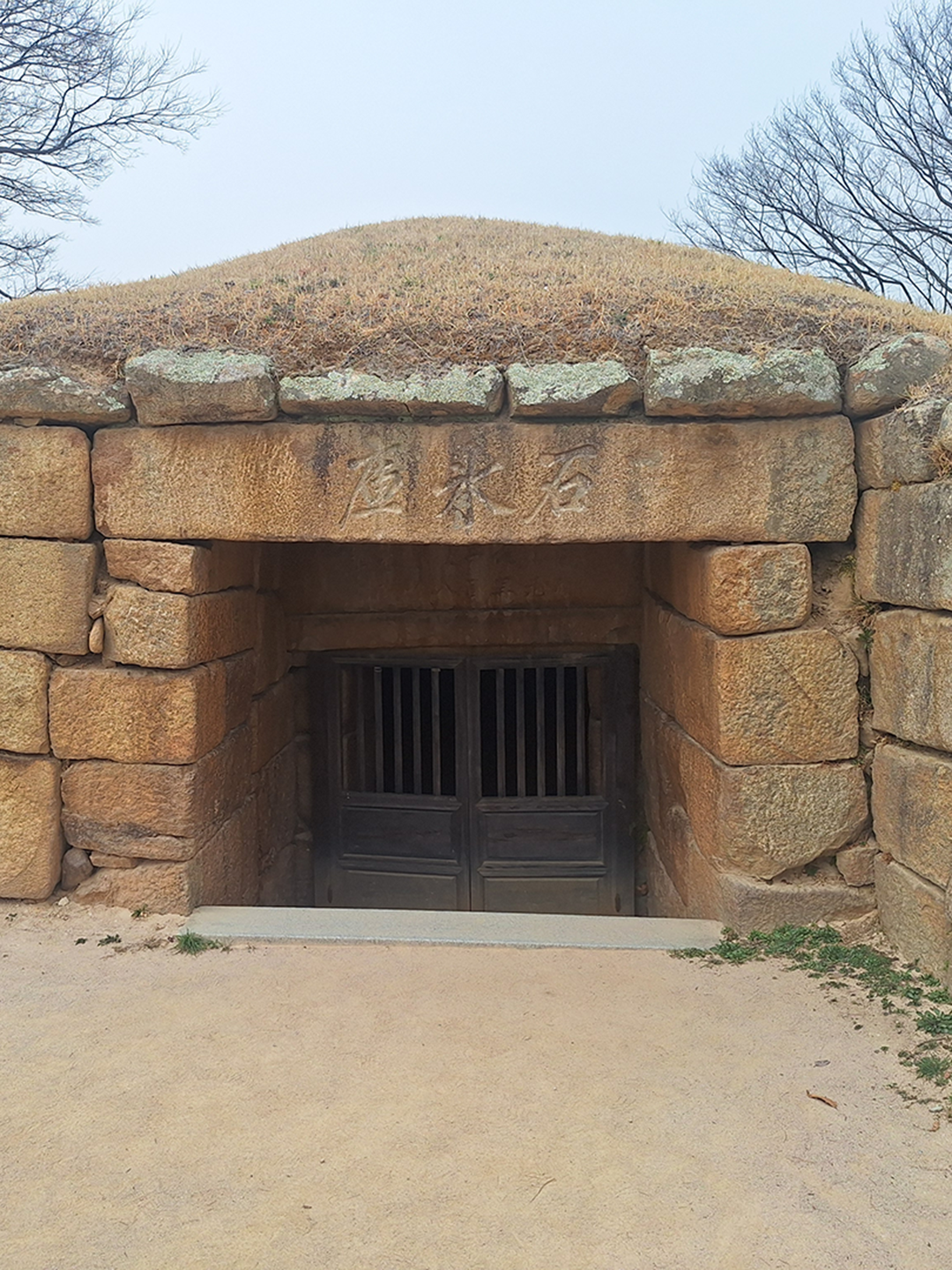
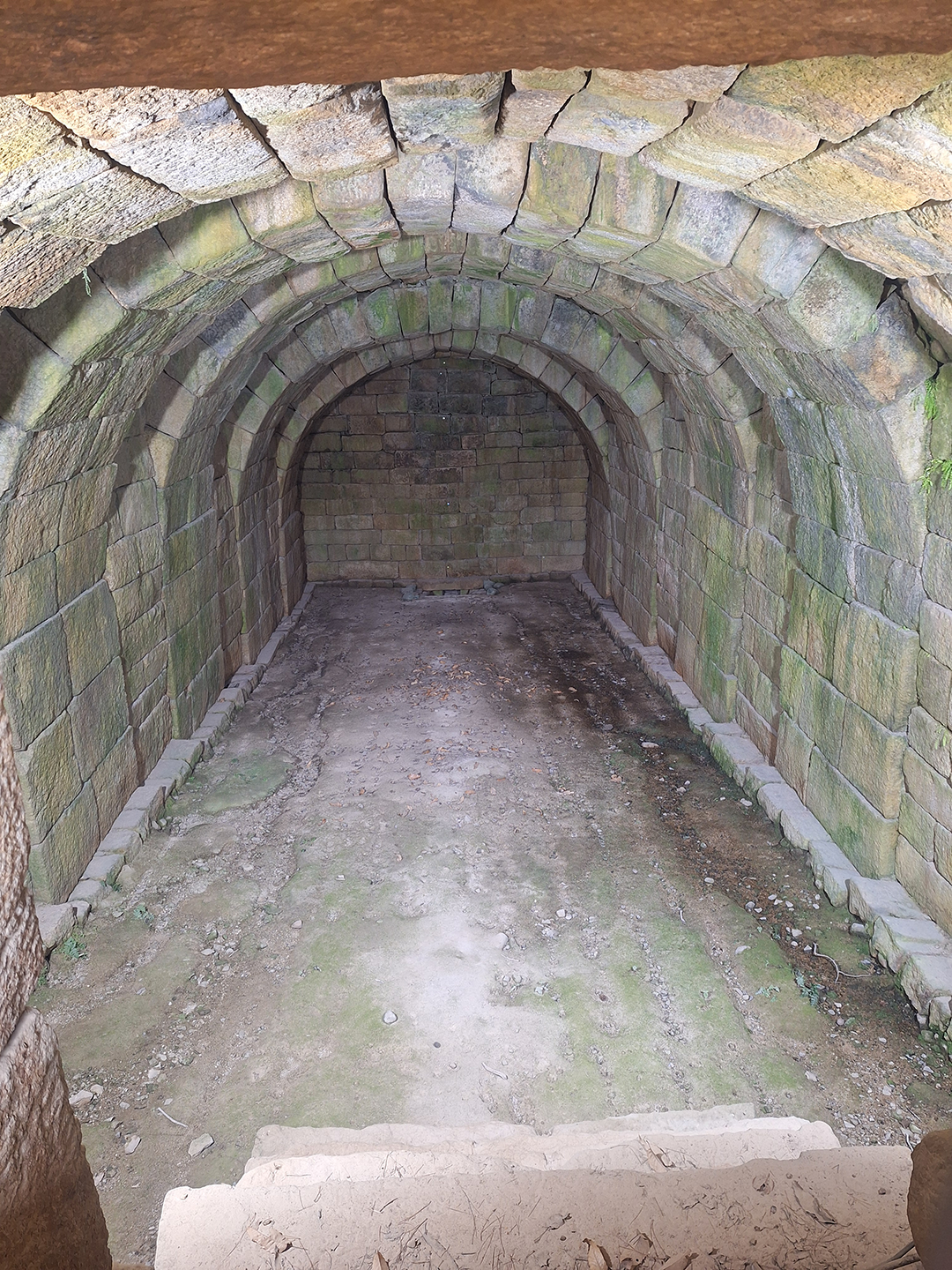
On the left is the entrance to Seokbinggo, the ice storage, while the inside is shown on the right.
In this park, I would take care to check out Seokbinggo and Cheomseongdae Observatory. Seokbinggo is a massive stone ice storage dug into the ground. It was super impressive to see and hard to imagine how they dug such a large area and placed the large stones inside.
It is located on a hill on the southern edge of the park. It is up here where you can see the active excavation sites. It also provides a wonderful view of the rest of the park and surrounding area. We went in late winter/early spring, while certain parts of the park were very lush and green, so I particularly enjoyed this portion. I bet it would be even better in the middle of spring when everything is at its most grown!
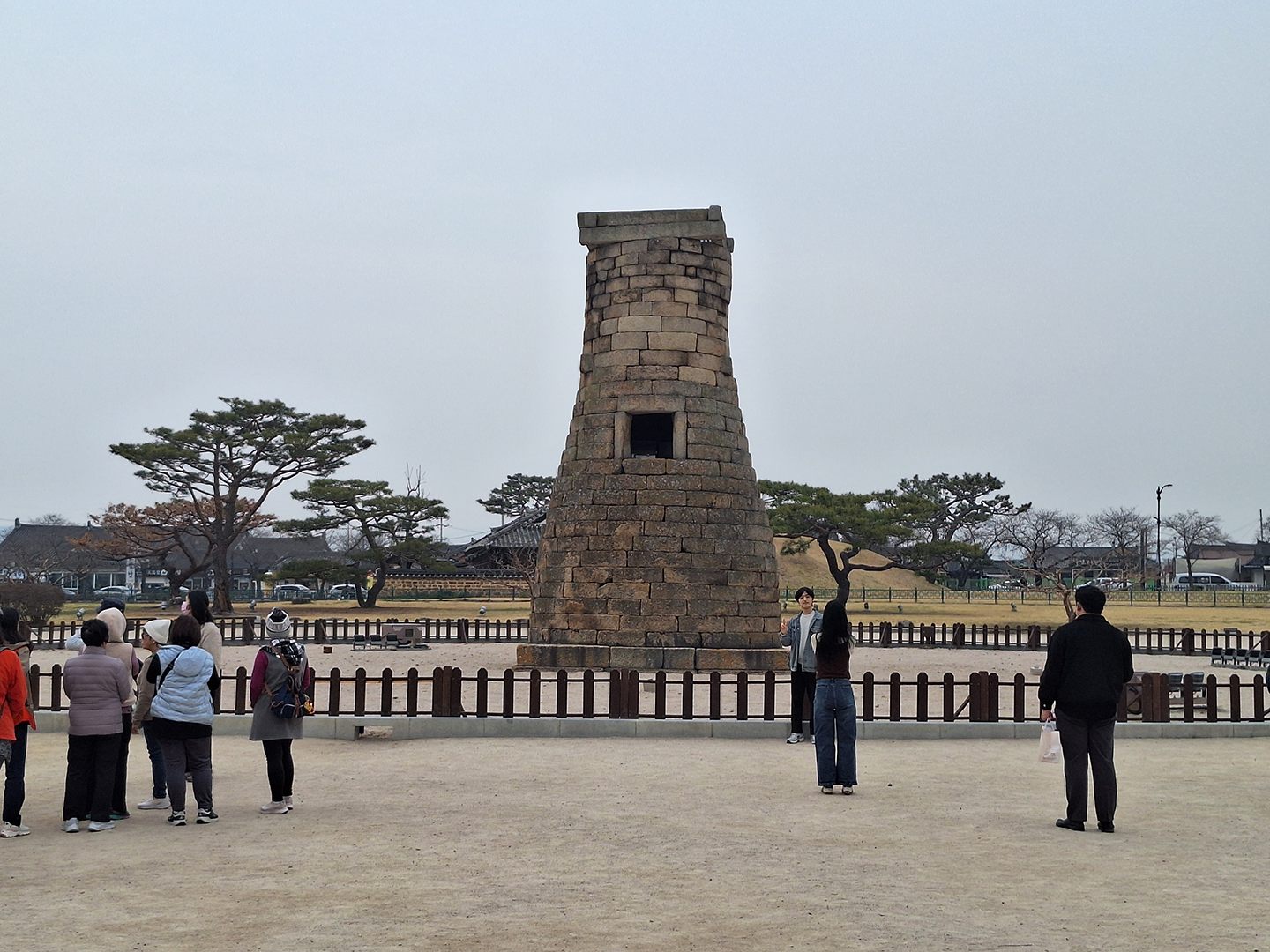
Cheomseongdae Observatory is a former observatory where astronomical observations were done. It is considered to be the oldest in Asia, with speculations that it may even be the oldest in the world. It is a round, stone pillar about 30 ft (9m) tall.
It is an especially popular site among Koreans. Whenever my friends travel to Gyeongju, I feel like I almost always end up seeing a picture of this posted on their Instagrams. So it felt especially interesting to finally get to see it for myself in person.
As someone that loves space and the stars, before going there, I was curious to know about its use and how its structure contributed to astronomical observations. But I was actually quite disappointed to find out that its structure apparently has no extra special uses and was simply a tall place to stand on top of while observing the stars. This felt especially perplexing to me as there is a taller hill to stand on only about 300 meters away! Though maybe that wasn’t available due to the former palace being located there.
Nevertheless, it was still quite interesting to see such a structure still standing in its original location nearly 1500 years later!
Daereungwon Tomb Complex
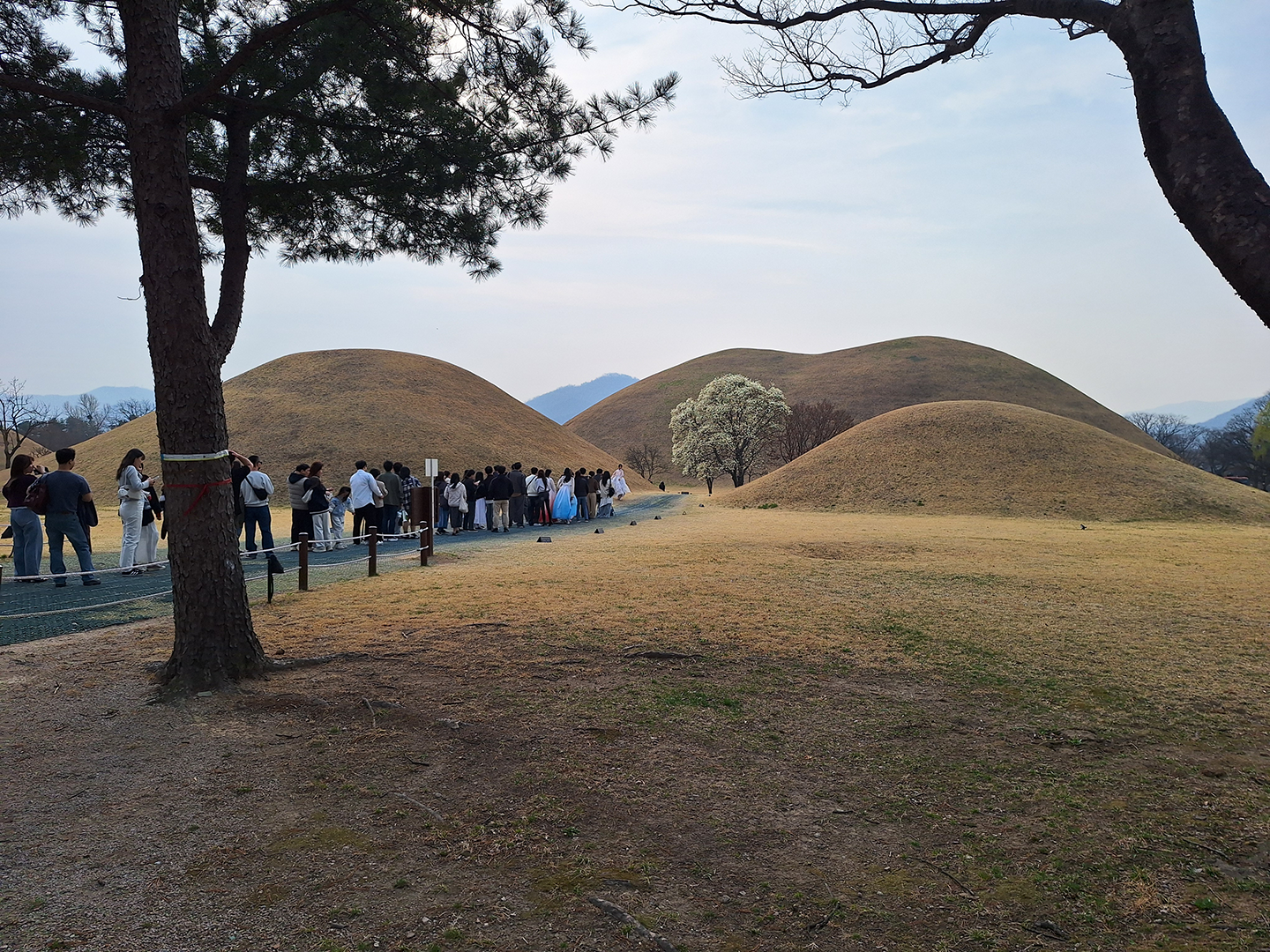
Across the street to the north in a way you can almost miss it, is the Daereungwon Tomb Complex. It is basically combined with Wolseong Fortress into a large park. You will just need to walk through a gate. This complex was one of the coolest historical things I got to see while in Gyeongju.
The Daereungwon Tomb Complex is a large outdoor park area where you can see how ancient nobles, kings, and queens were buried. While walking to the entrance of the complex, you may have in fact seen some of these tombs already without even realizing it!
They were the large mounds of earth covered in grass (at least in spring, when I went haha) in the park between Wolseong Fortress and the official Daereungwon Tomb Complex entrance. Within the complex, you can see twenty-three tombs from various figures of the Silla era.
The crown jewel of them all for exploring being Cheonmachong, meaning Sky Horse Tomb. This tomb is the only tomb that you will actually be able to go inside and see what the inside looks like. Within this tomb, you can see the actual coffin along with various relics inside.
The most famous of these is Cheonmado, or Painting of the Heavenly Horse. This painting is very well known among Koreans and when travelling to Gyeongju is a highly recommended sight. In fact, it has become such a symbol of the Gyeongju area that I saw this image of the horse used on many promotional items, souvenirs, and even painted on walls around the city.
When going inside the tomb, it can actually be easy to miss. I knew it was inside and took special care to look for it and even I almost missed it. It is located on the ground above the head of the coffin. It felt surprisingly hard to miss for being such an icon of the tomb and area itself. The one inside the tomb is a replica, but it still felt cool to see it inside the tomb itself. The original is located in the Gyeongju National Museum.
I especially loved just walking around this complex. During nice weather times, such as spring, it also just doubles as a pleasant park area to walk around. There were countless birds, flowers, and trees to enjoy while inside. People were taking photos everywhere and there were even some very popular “photo zone”-type areas with people lining up to take the perfect shot.
Night Activities
Donggung Palace and Wolji Pond
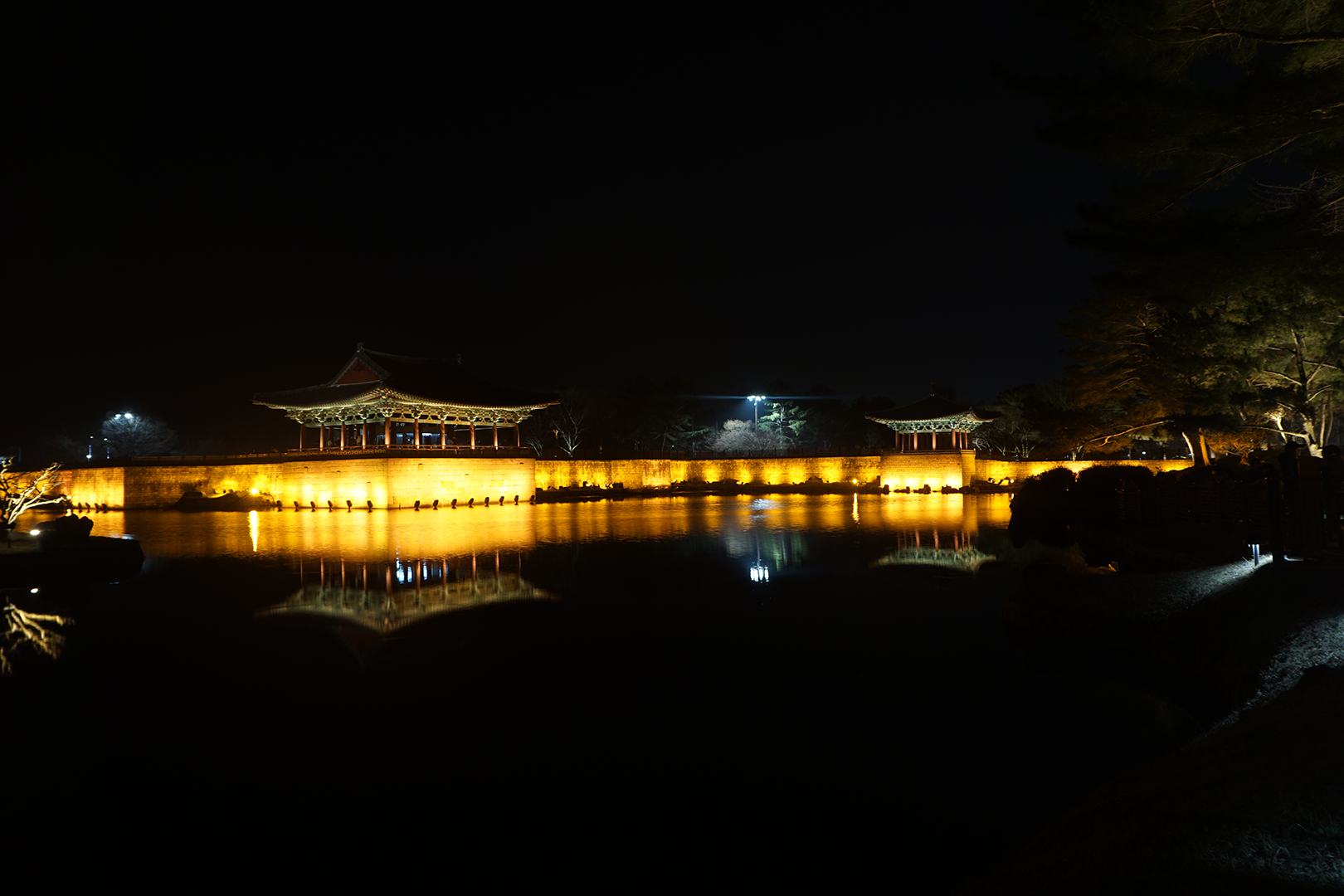
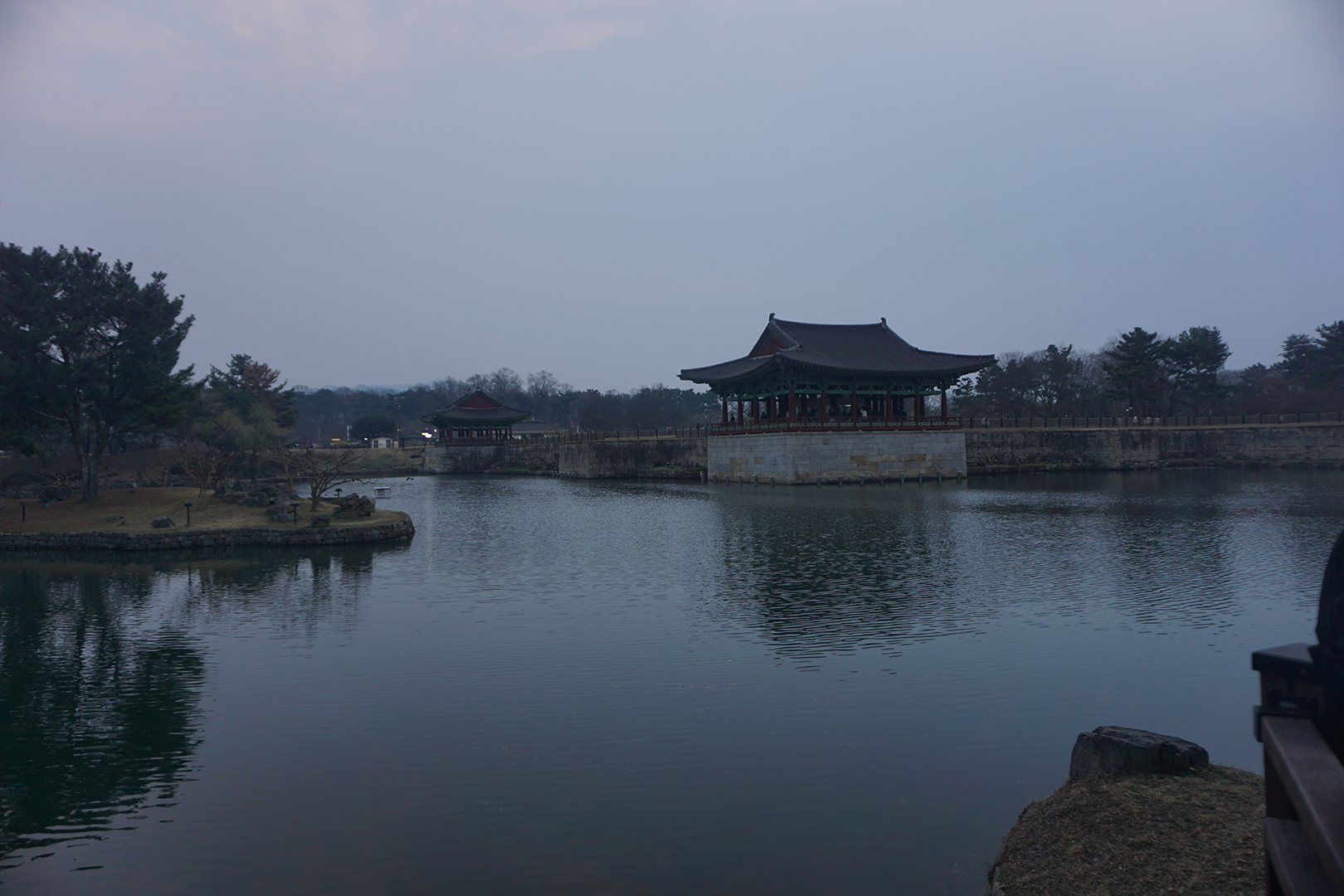
The first evening/night activity I will be recommending is Donggung Palace and Wolji Pond. More specifically, I would recommend getting there in the evening before sunset and staying until a little after dark.
Donggung Palace is, like every other recommendation in Gyeongju, a Silla-era palace, with an artificial pond. It is located right next to Wolseong Fortress and the Gyeongju National Museum, so if you were there during the day, it will be a short hop across the street!
It’s quite a small palace that only takes about 15 minutes to walk around completely. But you will probably end up spending lots more time there than that! And that is because at night, there are lights that light up the buildings and pond itself. It is such a beautiful view to take countless pictures from various different angles or even just stare at it for a while.
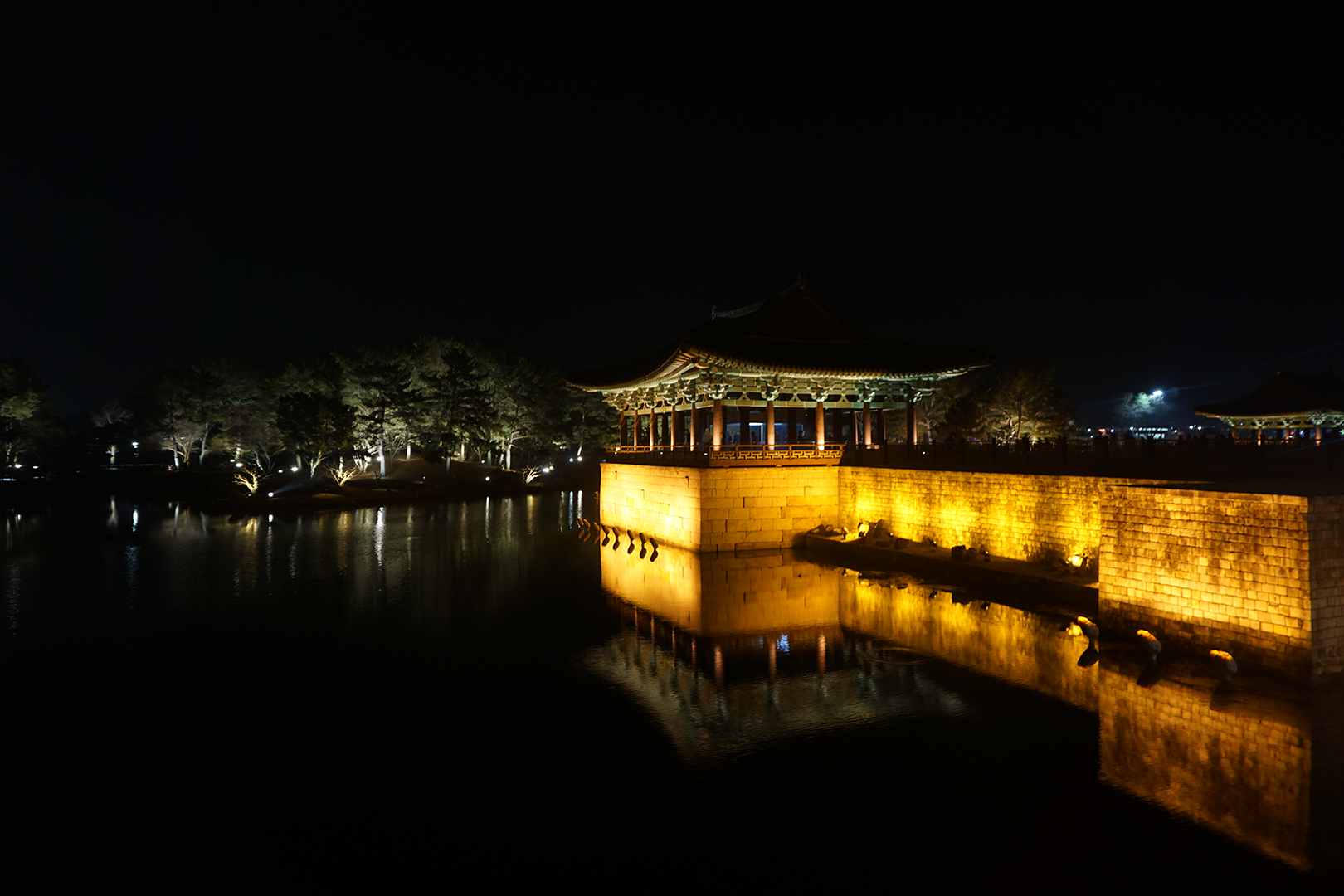
The pond surrounding the buildings elevates the whole palace to another level. And what made it extra special to me were the birds in the area flying around and calling. I totally recommend just taking it slow and staying a while enjoying the sights and sounds.
Woljeonggyo Bridge
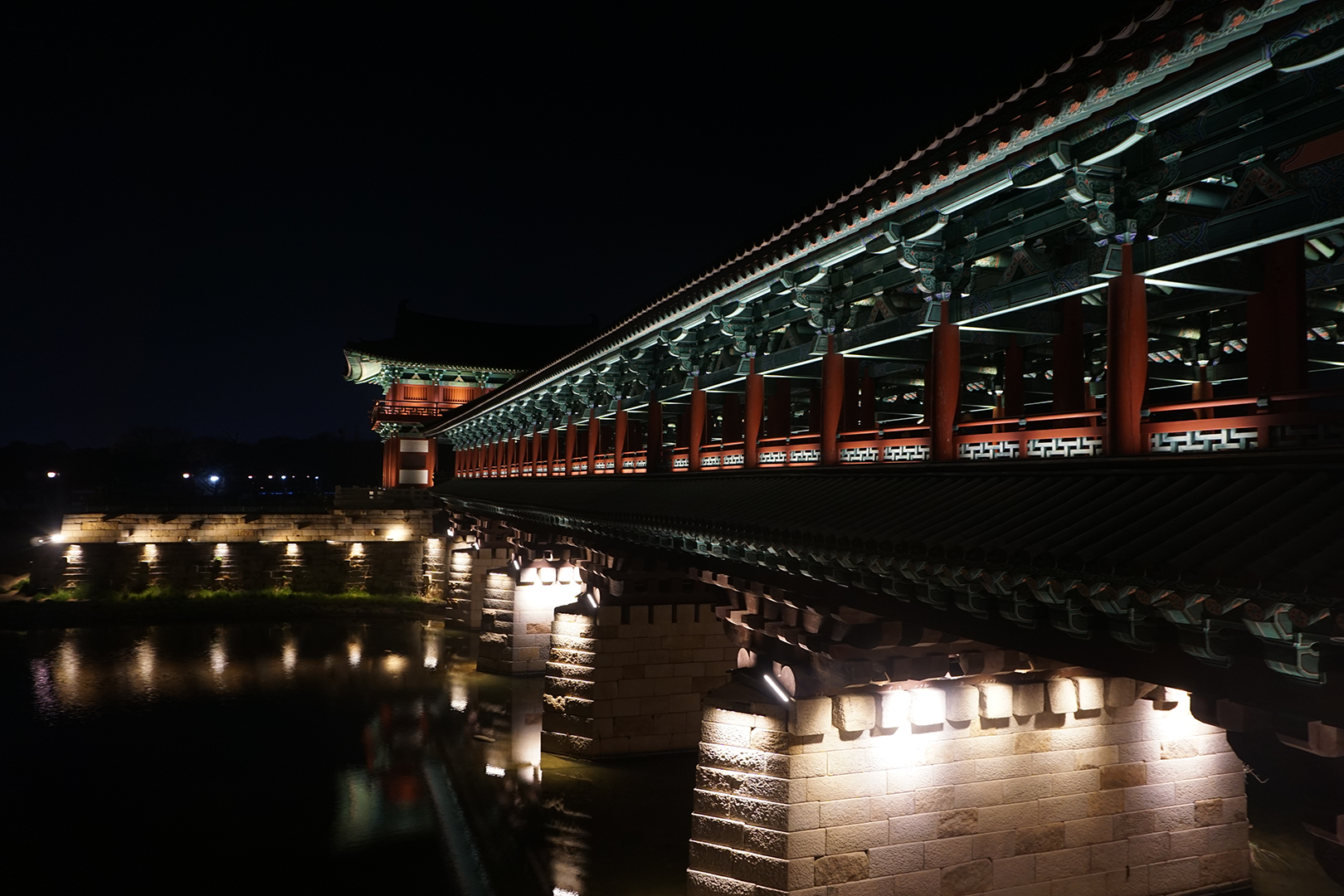
Next up on my list of recommendations for the night is Woljeonggyo Bridge. Woljeonggyo is a beautifully reconstructed bridge from around 760 AD. It was destroyed and its reconstruction was finished in 2018. It is a red wooden bridge across the river with two towers on each side. It is located on the southwest side of Wolseong Fortress, so it is once again close by to all the other sites.
For me, this was an unplanned visit that I didn’t even know about beforehand, but it ended up being one of my favorite sights in Gyeongju. Its stunning colors and architecture lit up at night were incredibly memorable. I took an unbelievable amount of photos just at this one place and I probably could have taken even more.
Non-Central Gyeongju
Bulguksa and Seokguram
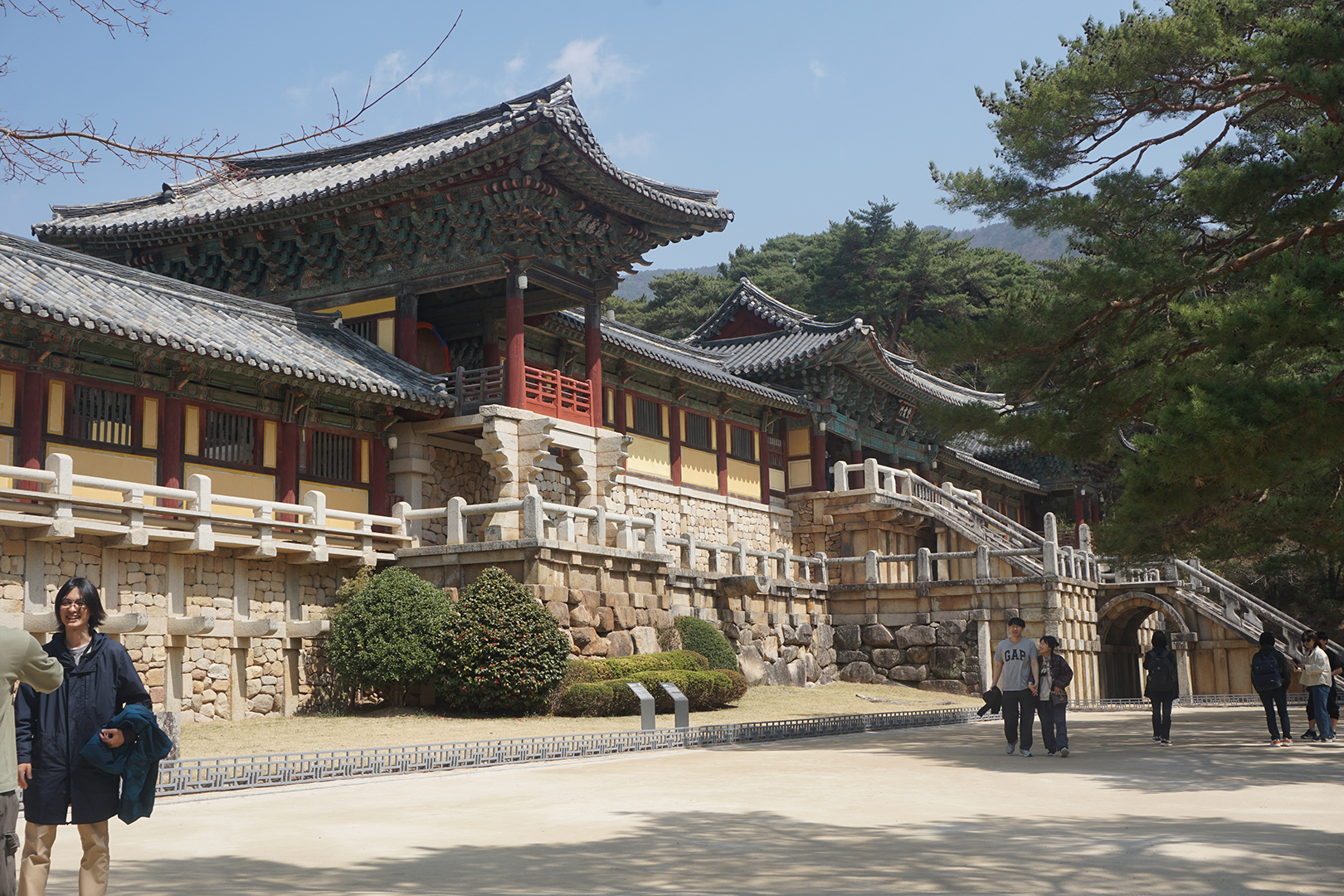
Finally, on my list of recommendations is Bulguksa and Seokguram. These are a ways outside of the city, so you will need to take a bus, taxi, or join a tour group. We ended up opting for the bus, which took about 40 minutes from central Gyeongju.
Bulguksa is an ancient Buddhist temple from the Silla era. It is considered a masterpiece from the Silla era and, as such, is even designated on the UNESCO World Heritage List. Its architecture integration into the mountain is truly stunning.
There are so many different angles and views to look at it from. I took so many pictures and honestly probably could have spent an hour more taking more pictures. And that was just on the outside!
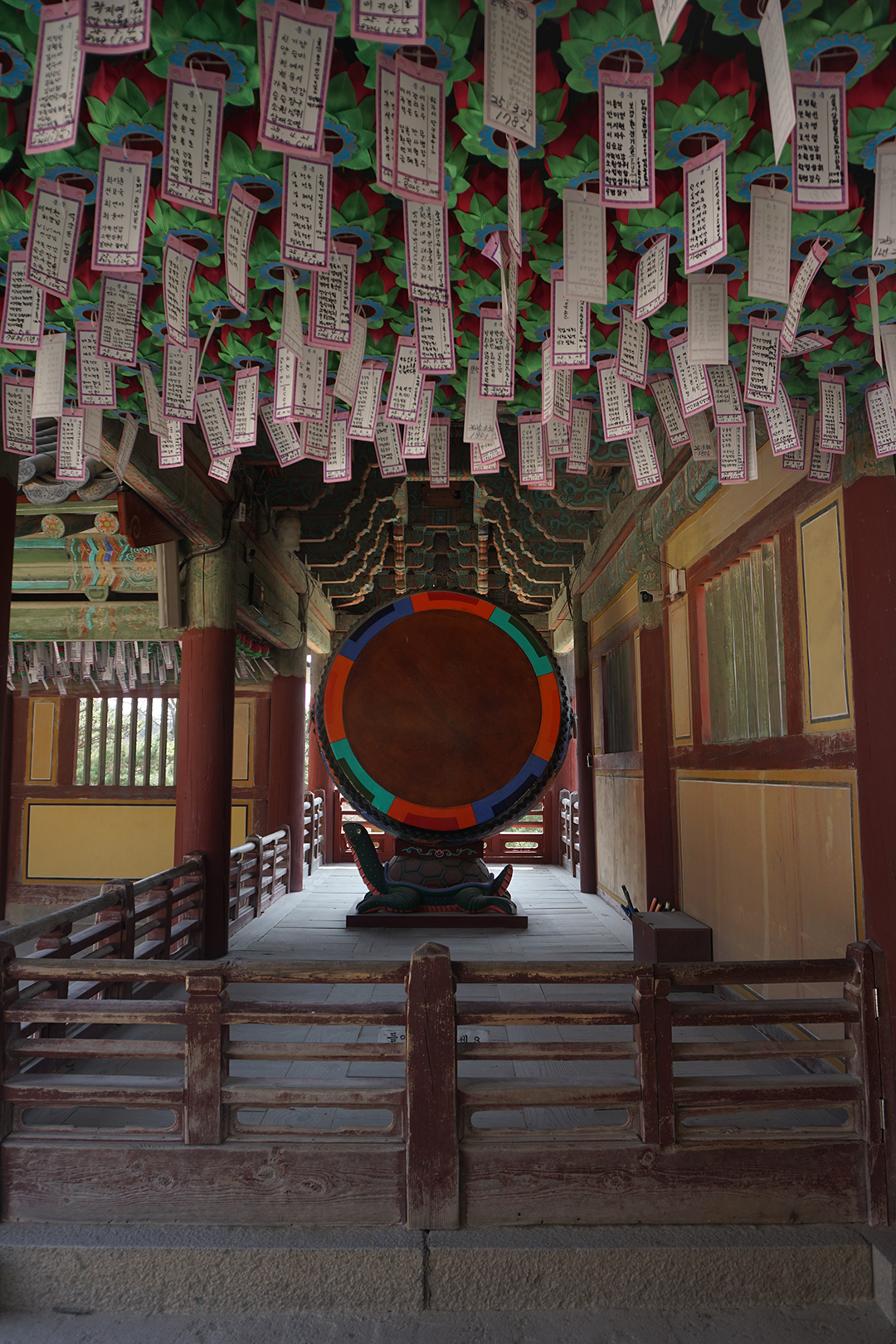
A drum inside the temple with wishes hanging from the ceiling.
On the inside, there are countless sections to walk through, each seemingly having their own little vibe. For example, one of the sections had hundreds, maybe thousands, of little rock piles stacked up. There were also lots of different buildings with multiple different Buddhas.
While the majority of the people there also seemed to be tourists, it is important to note that it is still an active temple, and as such, there were people praying and going about their business. So make sure to stay respectful of those around.
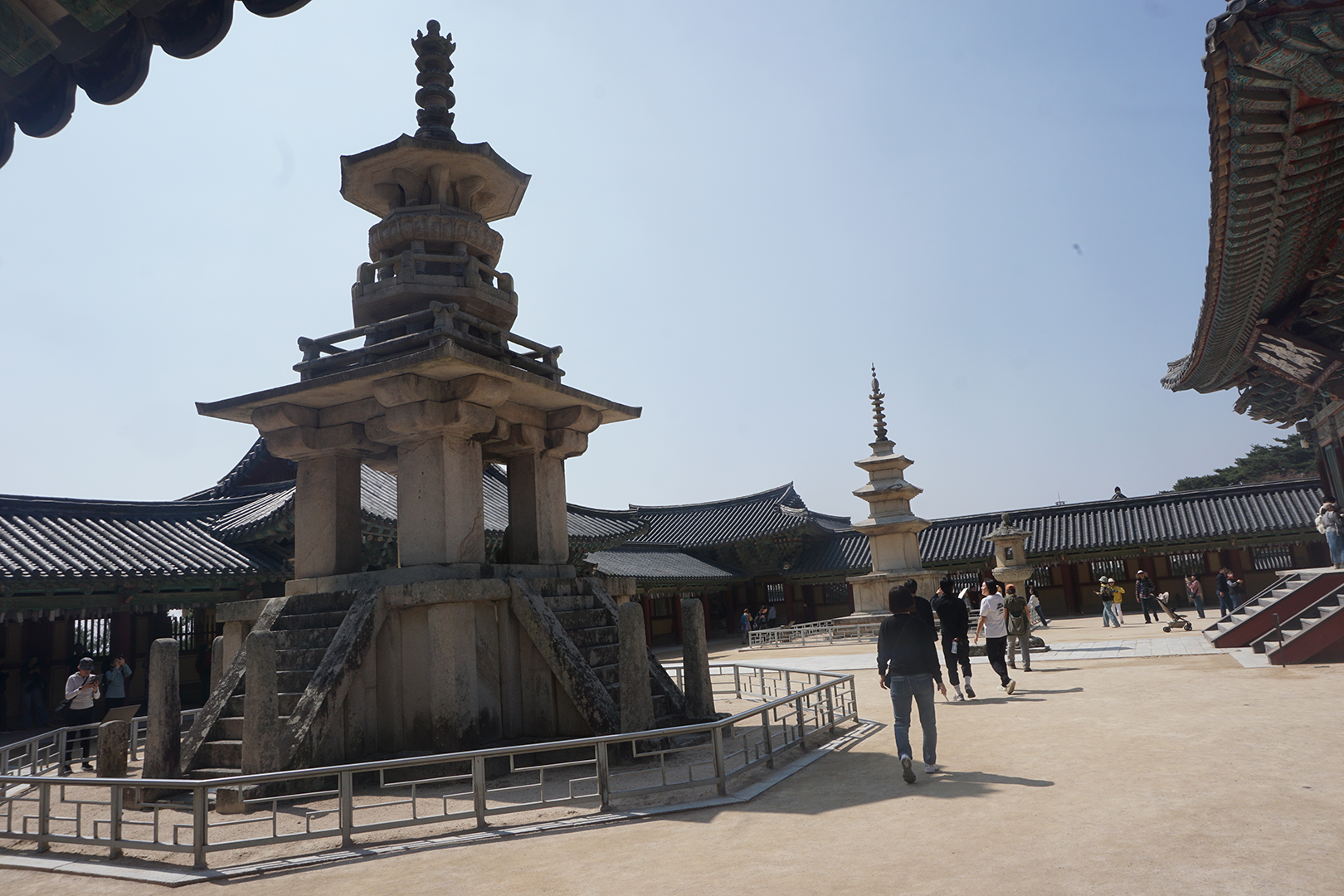
The two famous pagodas. The one in the foreground is featured on the 10 won coin!
Some of the highlights inside are the two pagodas! Apparently, according to what I’ve read, it is unusual to have two pagodas in the same temple. They are both listed as National Treasures of Korea. They are over 13 centuries old and are quite different in style. Seokgatap is a more standard and simple 3-tiered pagoda. Meanwhile, across from it, is its more ornate partner, Dabotap. Dabotap is a popular site and its history has led it to even be depicted on the back of the 10 won coin!
All in all, you can spend quite a long time here just taking in the different sites. And that’s before you have even considered Seokguram.
Remember how I said that Bulguksa was integrated into the mountain? Well, Seokguram is a hermitage that is part of the Bulguksa temple.
Except it is located 1.9 miles (3 km) away at the top of the mountain. It might not seem far, but it is actually quite a trek with a seemingly endless amount of stairs. If you don’t know about Korean hiking, you might not know that they can be surprisingly intense compared to the distance travelled.
Rather than switchbacks like you might be used to, it seems Koreans have decided that “I want to go up the mountain, so I’m going to go UP the mountain”, so the trails end up being very vertical with lots of stairs.
And if hiking is not your thing, there is a bus to the top! Or you can do some combination of hiking plus bus. We actually ended up hiking to the top, then taking the bus down after looking around.
Seokguram is a highlight for many, because of the stone Buddha. It is an ancient Buddha that is carved into the mountainside. It was incredibly cool to be able to see this as well as the beautiful room it was carved into. Unfortunately, to protect it, you can now only see it through a glass wall, so you can’t go full inside and experience it.
I understand the logic and know it’s a good idea, so that people in the future can experience it too, but it still felt a little disappointing. There were also lots of signs written in many languages saying to please not take a picture while inside, so take note of that!
This statue is also part of the UNESCO World Heritage List and is considered to be a National Treasure. It was not hard to see why. It was definitely one of the highlights for me.
While at the top, there is also more to do than just see Seokguram. After all, it is located on the top of a mountain! On good weather days, you can see all the way to the sea on the East coast. Or you can look the other way, into the valley and surrounding forests. Unfortunately for us, it was very cloudy, so we didn’t get much of a view that day.
Also at the top, there is even a Buddhist bell you can ring if you pay. It was actually quite funny. While we were hiking to the top, we kept hearing it ring from time to time and we were quite confused about why. The timings didn’t make much sense and seemed really random. They couldn’t have been marking the hours or half-hours or something like that. It wasn’t until we reached the top that we found out why and had a laugh about the fact that it was just being rung whenever someone paid to do it!
The combination of Bulguksa and Seokguram is an amazing combination to sightsee and I truly recommend it. Even to someone like me who has seen lots of similar sites and architectures in Korea, it had its own unique charm that truly stood out and made it worth exploring.
Food
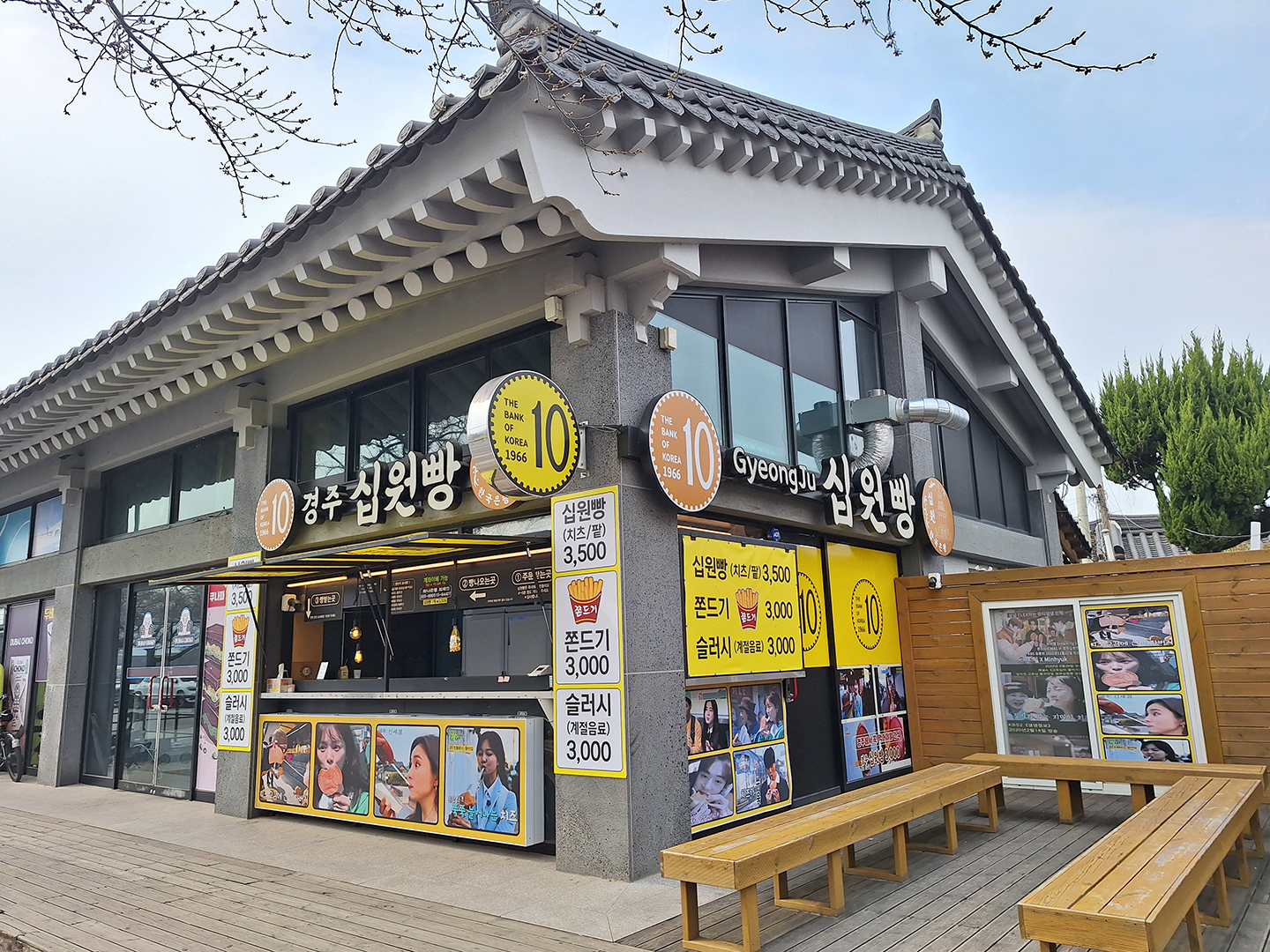
I can't believe I forgot to take a picture of the actual bread itself! But you can see what they look like in the pictures displayed on the shop.
When in Gyeongju, people always recommend two snacks to eat, 10 won bread and chalbori-ppang. While walking around, it seemed insane the amount of places I saw that were selling just these two items. Especially around the fortress and tomb complex.
The 10 won bread does not actually cost 10 won and is named that because the shape and design of it is based off the 10 won coin. It was similar to a waffle filled with your choice of red bean paste or cream filling.
The chalbori-ppang seemed more like a pancake filled with red bean paste. They were quite similar to each other, but I think they are probably both worth trying! As for the rest of your meals, there were a lot of restaurants around the area selling various Korean foods, so I think you should take your shot at trying any of them!
Bonus Locations
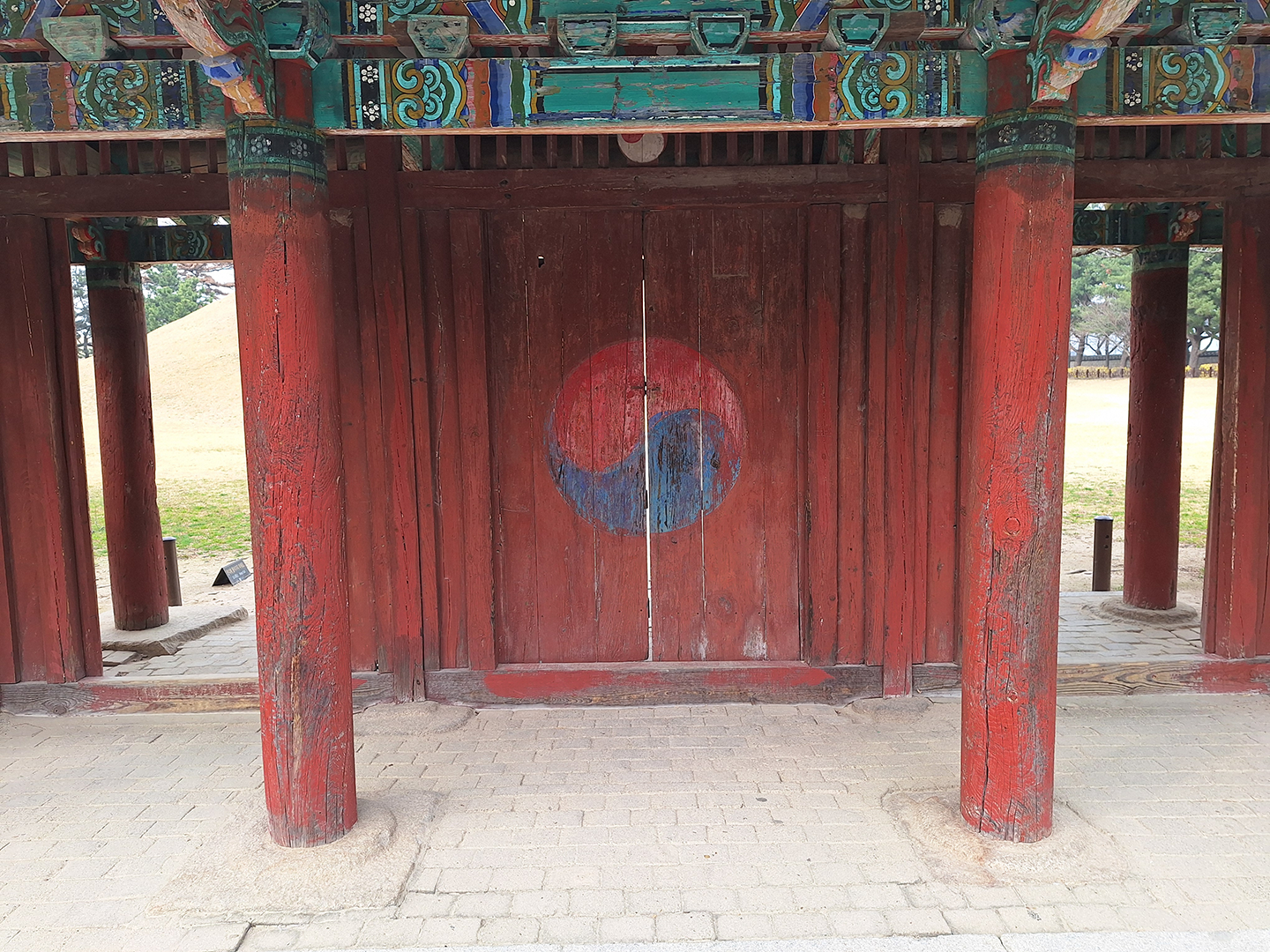
The next things I will mention are a couple places that I was actually unable to go to, but that seemed interesting while I was researching/I’ve heard good things about them. First off, there is Hwangniddan Street, which was described to me as a place that is popular among younger people for its small shops, cafes, photo studios, and more.
Other locations that are popular to travel to are Bunhwangsa Temple, Seongdeok Royal Tomb, Bonghwadae, and Geumgwanchong Tomb. These are all more historical tombs and buildings. They seemed interesting in their own ways, but alas, we didn’t have enough time to go to them too.
Bunhwangsa Temple and Seongdeok Royal Tomb will require trips by bus to get to, while Bonghwadae and Geumgwanchong Tomb are located within walking distance near the central area of things mentioned earlier.
The last thing I will mention is not really a specific place, but just in general. There are so many places in the area to see traditional Korean housing, called Hanok, so take your time to take those in and enjoy them! There was a small village with this type of housing near Woljeonggyo Bridge that I noticed while walking near the bridge at night, but I didn’t explore it as it was too late.
Conclusion
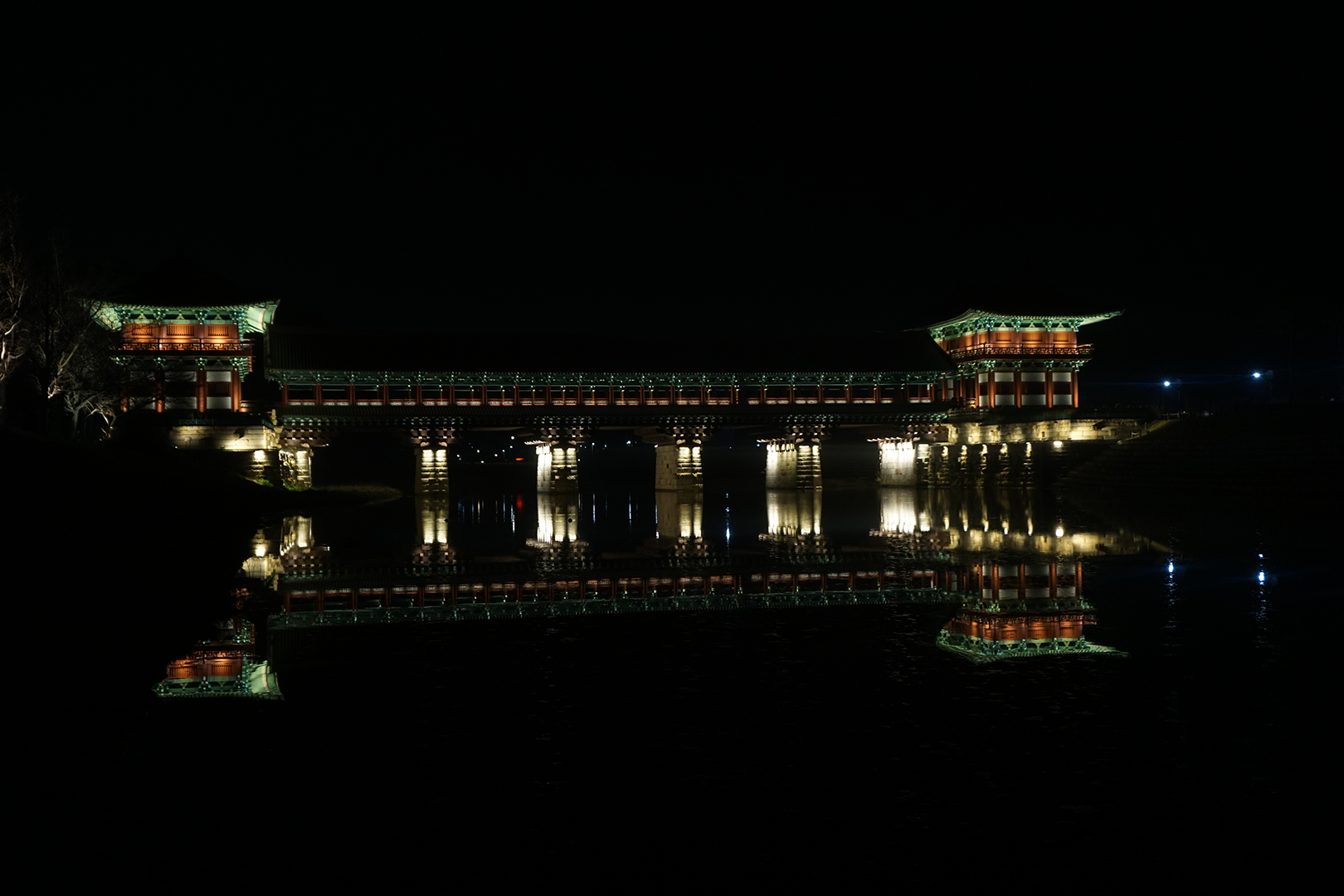
Bonus picture of Woljeonggyo Bridge
Overall, I think Gyeongju is a great place to travel. Some people in their reviews even describe it as a must-go for all the ancient historical sites, especially for those that may only get to travel to Korea once.
In particular, I liked the laid-back nature of everything. With all the mountains and nature around, it was just a very pretty place to explore. Even within the city, it felt very chill, because the streets were small and slow-moving, so you could easily just walk anywhere you wanted, which gave it an intimate feeling.
During my travels, I wished I had had more time to run or walk along the streams and trails to just take in the surroundings. So go learn about some ancient Korean history in Gyeongju!